3/5
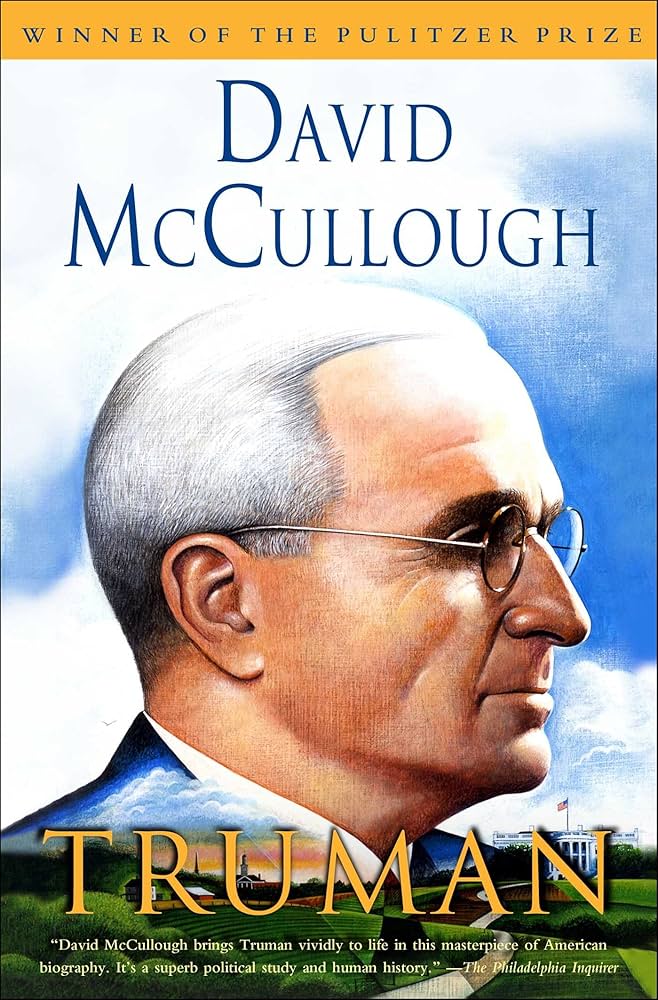
This book has some really high highs and some pretty rocky lows, and while I definitely developed a deep seeded respect for the presidency of Harry Truman. I cannot say the same for the writing of David MucCullough.
The good: like a good Lincoln biography, you cannot help but be romantic about the American republic’s ability to produce such soaring triumphs from the most ordinary backgrounds. Harry Truman’s rise to power is truly an American parable and one of the greatest narratives in American political history, books can and have been written just about the first year of his Presidency as there is a nearly unlimited number of events to mine for insight. In light of the arc of proceeding presidents its even more remarkable Truman guided the country through the rocky end of the second 30 year war. His staunch New Deal Partisanship is also fully embraced here, and is the sort of political jockeying that I feel is sorely lacking in the post-Watergate post-New Democrat version of the Party.
The bad: McCullough just seems not interested in actually exploring some of the most interesting themes here. Truman’s experience of the First World War and the economic hardship of the interwar period clearly gave him a deep seeded belief in Liberal Internationalism. How that squares with his ancestral Jeffersonianism is barely discussed. How that projects full throated embrace of the United Nations and then rocky failure in Korea receives only surface level analysis. Similarly, Truman is quite straight forwardly a racist and believer of a progressive segregation that was typical for Americans in the 1920s. How that man came to then become the standard bearer of the civil rights planks within the Democratic Part in the late 40s is basically just chocked up to electioneering around the 1948 race. This to me is the most interesting angle in the making of Harry Truman but McCullough just never takes the time to really deal with what that MEANT. Why it happened, and how once these wheels began to move the changes gained a momentum and logic of their own. While he doesn’t make overt apologia for Truman’s beliefs he also doesn’t want to examine what it would mean to believe these things and still embrace the program that Truman did. This is a baffling omission in a book of this length and I think speaks to McCullough’s own short comings as a biographer.