
3/5
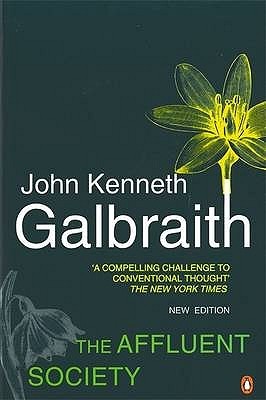
Pretty fascinating read on how Keynes’ American successor saw the development of the post war consumer economy. There are a lot of fundamental questions here about the nature and purpose of production that don’t really receive much attention now. In some ways I’m glad Galbraith didn’t see the 21st centuries development, and his death occurring before both the dot-com crash and the Global Financial Crisis is kind of a shame.
Asking exactly who all of these consumer goods are benefiting and what role the advertising industry plays in encouraging consumption feel almost built in to our lifestyle now. However, I think Galbraith lays out a mode of thinking that allows for Keynesian economics to adopt new modes of thinking for a low-growth 21st century future. Particularly the rising challenge of climate change will require a re-ordering of the consumer economy, either sooner or later that will catch up with us. Schemes to reduce working hours, examine the consumer economies pitfalls, and a human-focused economics all seem like steps in the right direction.
While thinking about what this book, originally published in 1958, has for us in this century certainly has me thinking about paradigm shifts. The challenge of Climate Change and the rise of global personalist authoritarianism in my own life time certainly has parallel’s to the hellish start to the 20th century that Galbraith came of age during. Ultimately, when I think about what Keynesianism for the 21st century looks like, this book seems more important than Quantitative Easing or even MMT. Ultimately, to paraphrase Keynes “In the long run, we are all dead. But in the short run we are still alive.” Despite the challenges we face, a new paradigm for this century must be devised if we are to stay alive.